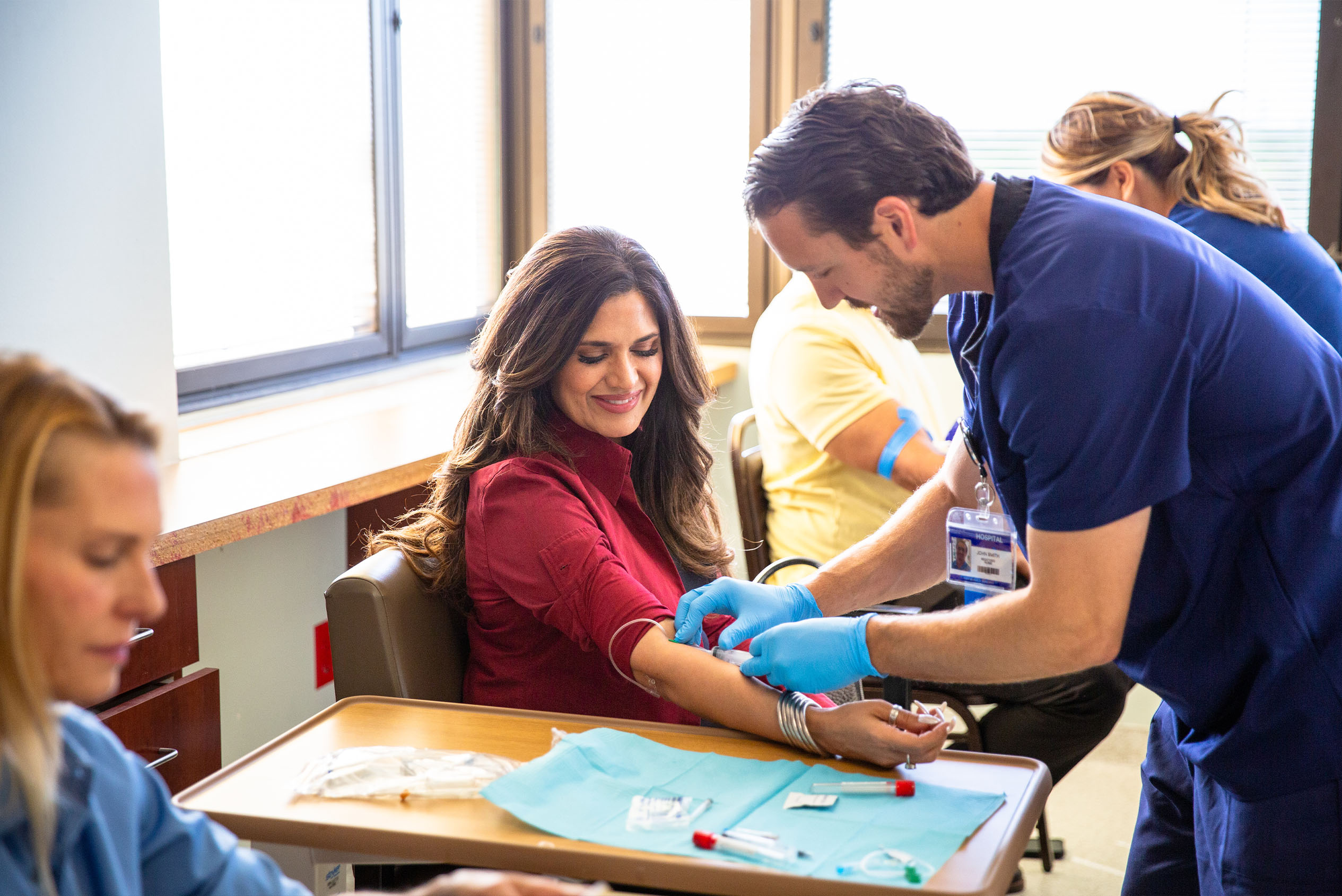
Laboratory (Phlebotomy) Pathway
Phlebotomy Technicians are responsible for identifying the best collection method for specific patients, drawing blood, accurately labeling vials, and properly transporting the samples to the laboratory for analysis.
Information Session
If you would like to learn more about this opportunity, RSVP for an info session.
There are no matching results. Try a new search or browse our Programs and Classes.
The Importance of Phlebotomy
Blood transfusions save millions of lives each year, and without the precise work of trained phlebotomy technicians, patients’ lives would be put at risk.
- Dispose of contaminated sharps, in accordance with applicable laws, standards, and policies.
- Organize or clean blood-drawing trays, ensuring that all instruments are sterile and all needles, syringes, or related items are of first-time use.
- Draw blood from veins by vacuum tube, syringe, or butterfly venipuncture methods.
- Match laboratory requisition forms to specimen tubes.
- Dispose of blood or other biohazard fluids or tissue, in accordance with applicable laws, standards, or policies.
- Conduct standards tests, such as blood alcohol, blood culture, oral glucose tolerance, glucose screening, blood smears, or peak and trough drug levels tests.
- Collect specimens at specific time intervals for tests, such as those assessing therapeutic drug levels.
- Process blood or other fluid samples for further analysis by other medical professionals.
- Provide sample analysis results to physicians to assist diagnosis.
Learn more about being a Phlebotomist, including employment trends, salary averages, and related skills at O*Net(opens in a new tab) or CareerOneStop(opens in a new tab).
Education or Training Requirements
- High School Diploma/GED
- Be at least 18 years old
- Complete 40 hours of didactic instruction and 40 hours of a clinical externship
- Depending on school: daytime, evening or weekend hours may be available
Accrediting Agencies
- CDPH, Laboratory Field Services
- Bureau for Post Secondary Education (BPPE)
- National Accrediting Agency for Clinical Laboratory Sciences ( NAACLS)
- WASC Senior College and University Commission (WSCUC)
- American Society for Clinical Pathology (ASCP)
Why accreditation is important: An accredited school has been reviewed by an industry organization to ensure that quality standards are met and maintained, providing some assurance of receiving a quality education. Some employers, licensing boards, and graduate schools will only accept credentials earned at an accredited school. Attending an accredited school will often increase your opportunities in the long run, as employers usually prefer to hire people who have graduated from accredited programs.
Certifications/Licensure
- National Healthcareer Association (NHA)
- California Department of Public Health (CDPH) to apply for license
Please note: The above content is for informational purposes and is not intended to replace or provide any employer-specific requirements. Please be sure to check your employers’ job descriptions for specific requirements or consult your local HR department.
Interested?
Connect with a Career counselor via MyEdFund, our secure member portal.
We receive a tremendous response to our education and training programs. Availability is not guaranteed and varies based on demand, available spots, and our partnerships with educational providers.